
Flexibility
Our approach to developing flexibility is to support the development of ease and stability for an athletically capable body.
With ease means without muscular strain. When at ease, your breathing is relaxed and your heart rate would be considered at rest, the same as it would be if you were just sitting down comfortably.
Stability means support your own bodyweight in any position, without muscular strain and with a complete sense of balance.
Ask yourself: "Is it working?”
What is flexibility?
Stretching is ineffective
The role of the spine
How to increase flexibility
A flexible lifestyle
Ask Yourself: Is It Working?
There are two simple ways to determine if what you are doing to improve flexibility and increase range of motion works. Ask yourself, compared to one year ago (and 5 years ago):
1. Are you able to bend forward and touch the floor (or your toes) with more ease?
2. Do you have a greater sense of stability and ease within the body in general?
If you find it harder to bend over, if your body feels tighter or stiffer, and if movement feels heavier/more difficult, than whatever you’re doing is not working for you - unfortunately, it is working against you.
A Case Study
The following comparison photos demonstrate an improvement in range of motion. The first photo pair shows a weighted reverse dislocate in a pike position by Emily. The second photo pair shows a standing pike by Darren.
For context, in both 2015 and 2020, our activity levels in terms of volume was virtually the same. The difference in flexibility can be attributed to a refinement in the type of training we were doing for flexibility.
Year over year, we see marked signs of improvement in ranges of motion in all positions, as well as a greater sense of effortlessness when entering, holding, and exiting any given position.
When you do the right thing, you will not hit a plateau. You will continue making small improvements.
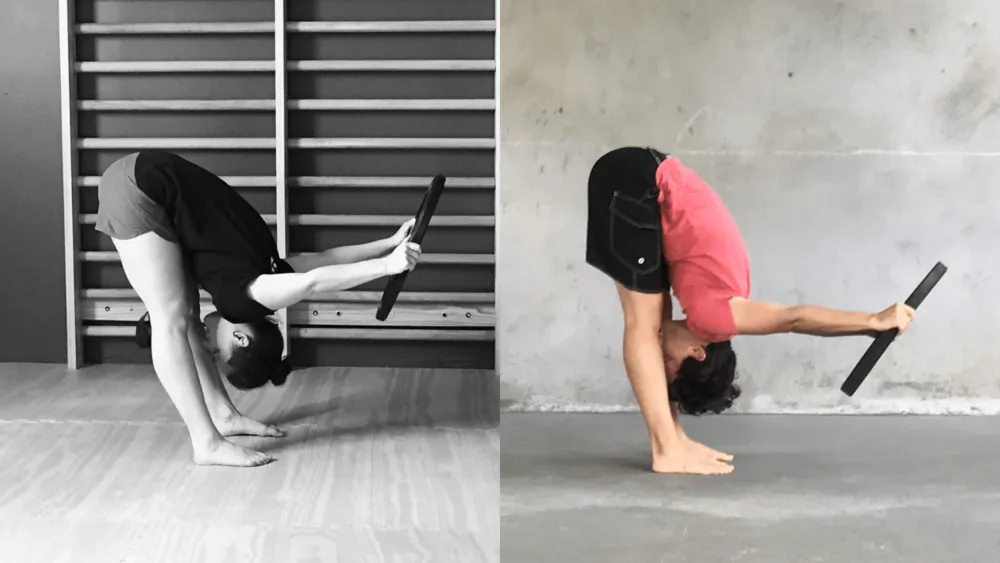
A side-by-side comparison showing improved range of motion from 2015 (left) to 2020 (right).
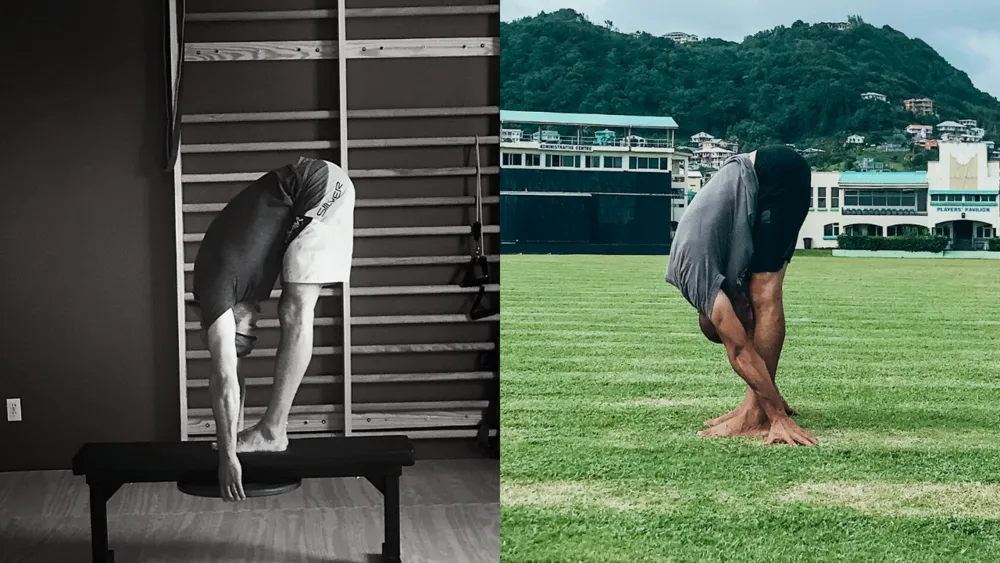
A side-by-side comparison showing improved range of motion from 2015 (left) to 2020 (right).
What Is Flexibility?
Flexibility (flex-ability) refers to the body’s ability to bend/fold, expand, and twist to get into different physical postures. There are countless postures the human body can take.
In any posture, the body should be at ease (relaxed) and stable (strong and balanced).
If the body is not at ease, it creates dis-ease on many levels (e.g. stressed muscles, stressed joints/ligaments/tendons, stressed organs, stressed breathing, stressed mental/emotional process, etc).
Dis-ease impedes physical performance on many levels and increases both frequency and severity injuries.
Flexibility is one aspect of bringing the body to greater levels of ease and stability, but only if it is trained properly. Training flexibility improperly decreases performance and resilience.
When training flexibility, in any position or posture, the body should be relaxed, strong, and balanced.
Flexibility From Stretching Is Ineffective
Stretching muscles is unfortunately still the prevailing method of increasing flexibility. Conventional stretching approaches are outdated, ineffective, and can increase risk of injury.
There are many methods of increasing useable ranges of motion that are proven to be much safer and more effective, especially in the context of athletic development and sports performance.
Flexibility, like any quality of athleticism, is not developed effectively in isolation.
Stretching muscle groups may or may not produce some gains in range of motion, but even if it does increase range, that range will not necessarily carry over to athletic performance. Rigid muscles don’t respond well to being forcefully stretched. It can also take away from explosiveness and elasticity.
For flexibility to be sustainable and useful for an athlete, in must be trained in a way that resembles the actual movements that an athlete performs, and under the types of load and stress that the athlete will have to cope with in reality.
The Role Of The Spine
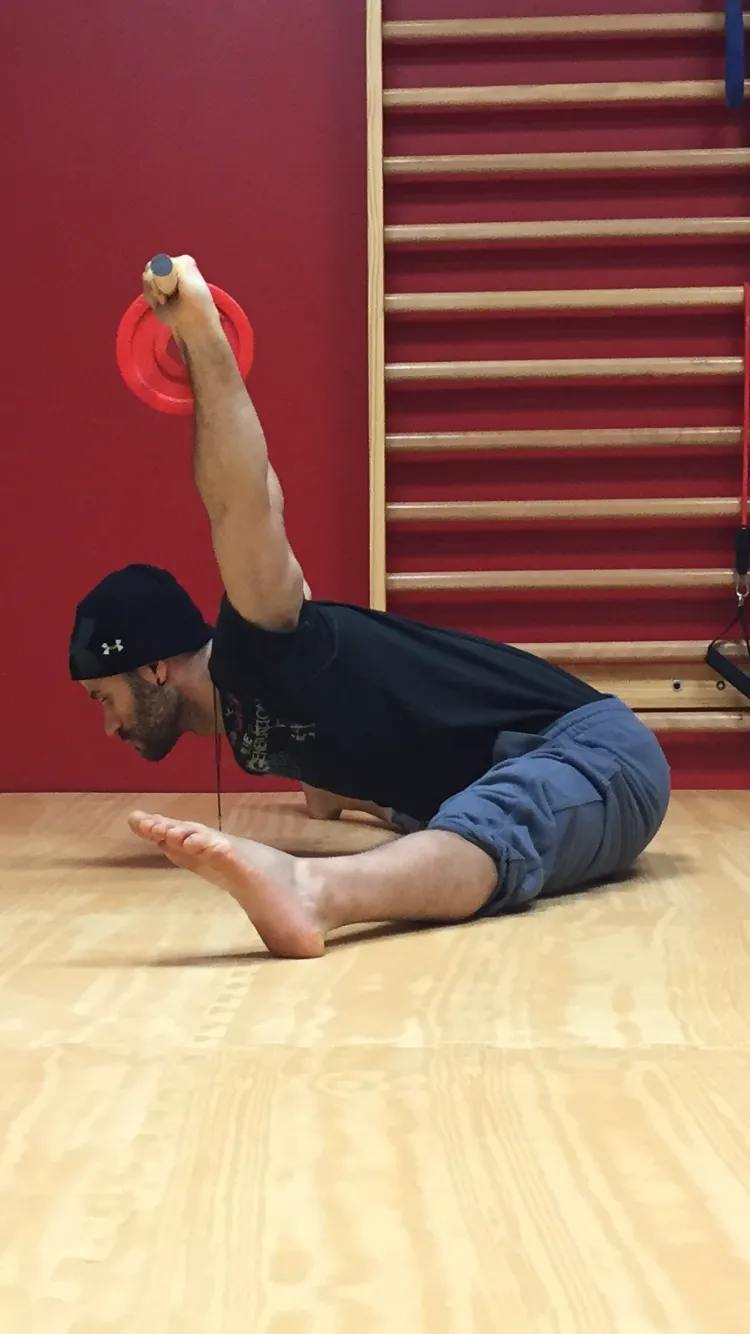
The most common misunderstanding about flexibility is that the muscles need to stretch in order to become more flexible. The basis of postural flexibility is the spine.
When we say flexibility of the spine, we are referring to:
• the spine itself;
• the spinal column, along which the skull, ribcage, and pelvis align; and
• the back muscles and connective tissue.
With its 33 joints, the spine is like a 33-link suspension system. It is designed for maneuverability. It is not possible to have a flexible body with a rigid spine.
A missing link in a lot of people is space between the joints of the spine. Due to conventional sitting postures and sedentary lifestyles, the lumbar area of the spine, in particular, becomes too compressed. This creates irritation, pain, and a host of other problems throughout the entire body.
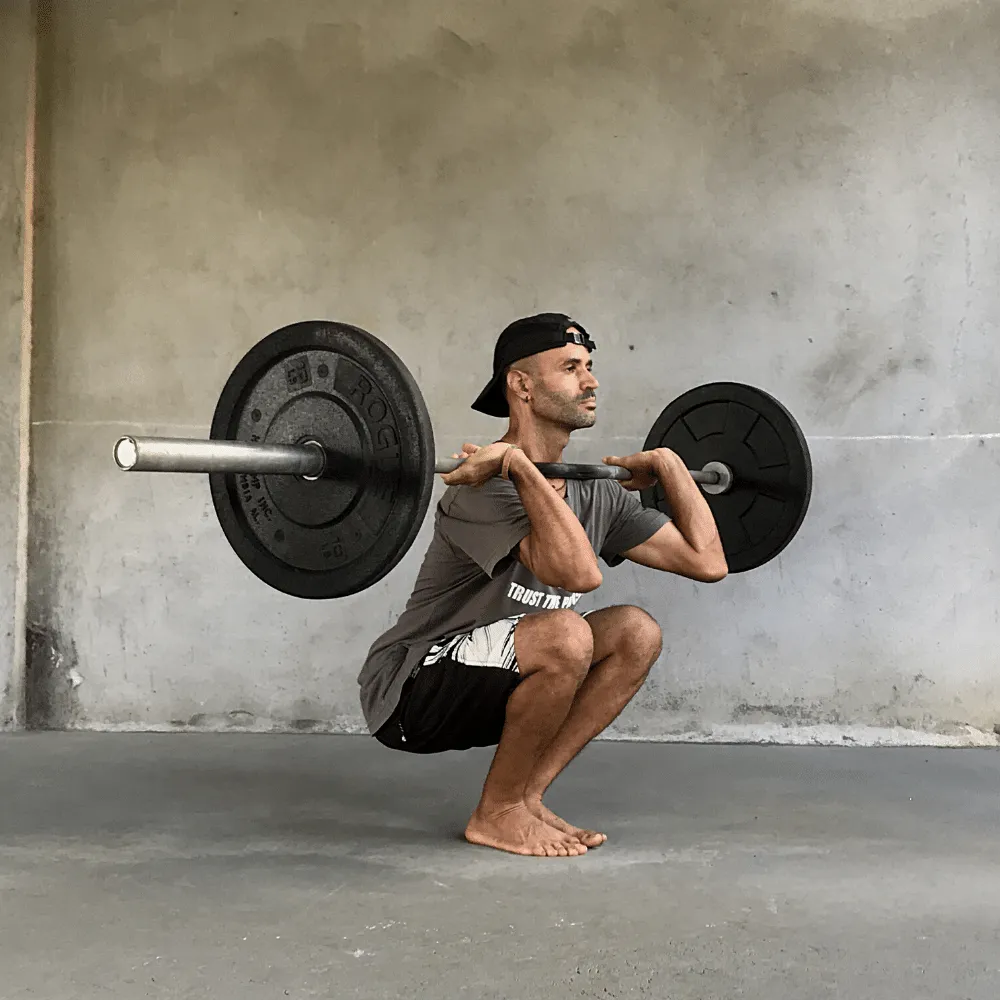
In a natural resting squat position, the body is supported on the feet and the spine is naturally ‘stretched’ and elongated in a way that maintains natural integrity. This is one reason why the squat is such an important fundamental position for everyone.
When we work with athletes and other individual clients, we work on flexibility and coordination of the spine and back.
To keep the spine flexibly strong and functional, especially for an athlete, requires more than static and passive back flexibility. It also requires active and dynamic motion in all movement planes, plus a level of awareness, sensitivity, and coordination that comes only with a holistic and realistic training process.
Having limitations in range of motion of the spine and torso greatly impacts how well force and power can be applied. The ability to bend, twist, and rotate needs to be unrestricted - your spine is the axis from which you generate power as an athlete.

A flexibly strong back and a dynamic spine is an essential foundation to an athletically flexible body.
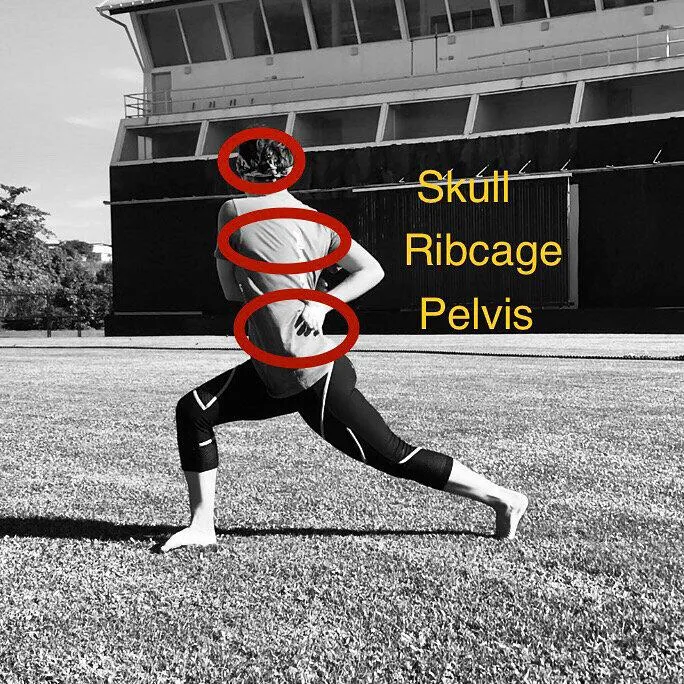
The skull, ribcage, and pelvis are the three weight centres of the body.
How To Increase Flexibility
Flexibility is a function of joint mobility, elasticity, and muscle relaxation. To train flexibility, we focus a lot on those attributes in a holistic and realistic way.
The easiest way to approach flexibility is to focus your intention on achieving a position. The intent must be clear. Especially in the event of severe inflexibility, this means visualizing the position you wish to be in, even if you are currently far away from physically achieving the position.
Our aim is always to keep the integrity of the whole structure and ensure it functions in sync, as a fully integrated system. We always treat/train the body as a whole, even if we are focussing on a particular area/posture/pattern.
There are three types of flexibility: passive, active, and dynamic. All three are important: in what combinations and to what extent depends on the individual. How much flexibility is required in certain postures is also an individual matter.
There are certain fundamentals of flexibility/range of motion that are necessary and ideal for everyone to achieve certain human positions. An example is the full resting squat, an essential position for human wellbeing. Full squat mobility is when feet are flat on the ground and the stomach is resting against the thighs. Our ‘core programs’ such as LEGS, and our other resources that are intended for everyone to benefit from, thoroughly address such fundamental patterns and provide the safest and most effective means of mastering them with a little attention and consistent practice.
The most important thing is to have enough flexibility to keep your body in a state of ease and stability as you live and perform the activities you need to perform regularly (plus a little extra, just in case).
It’s imperative to ensure your flexibility is balanced with the appropriate amount of coordination and strength to use the acquired range of motion in realistic conditions, dealing with pressure, difficulty, unpredictability, etc. Otherwise your flexibility is only good for posing in static positions, which is of no use for an athlete.
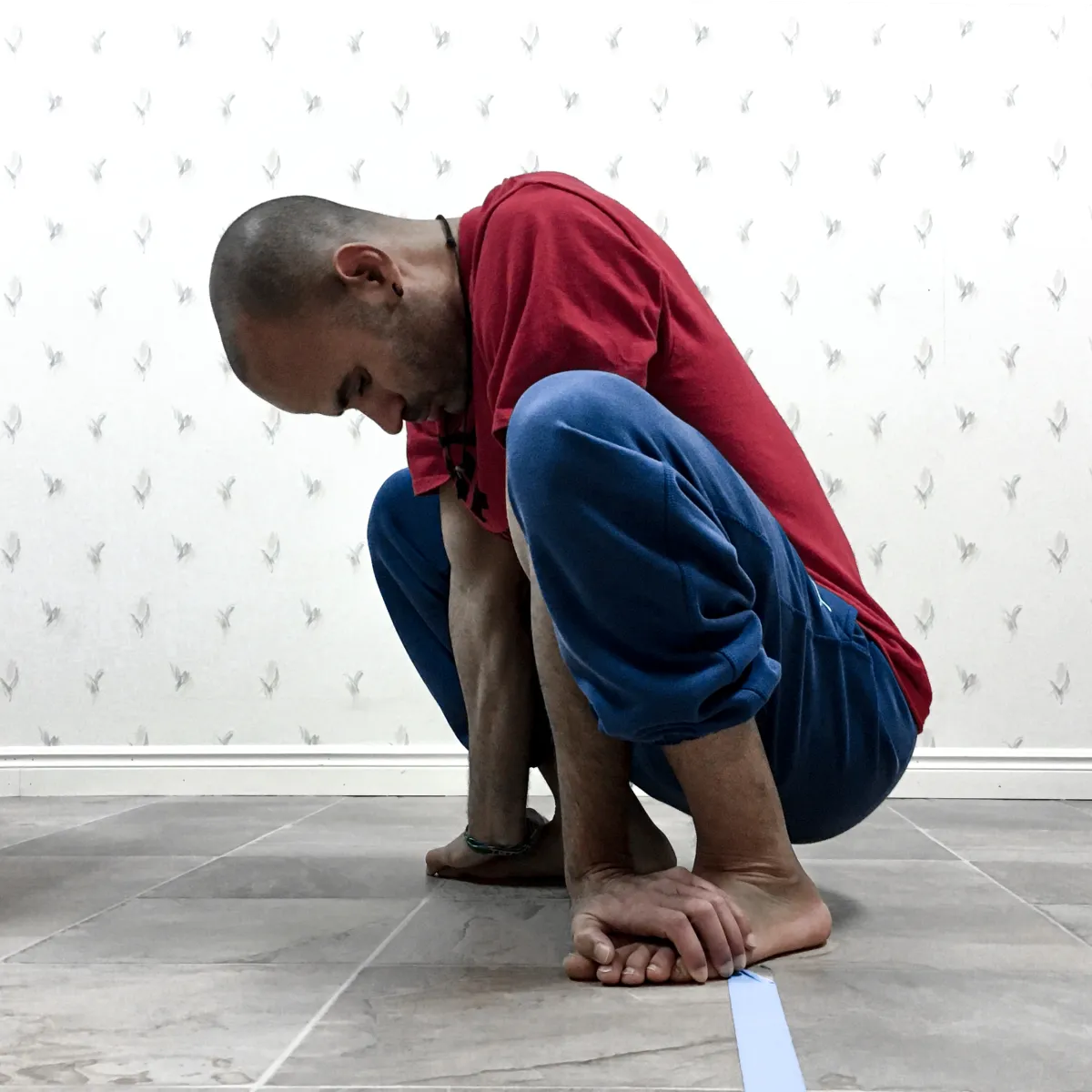
The natural squat is a position in which the human body is designed to be at rest.
A Flexible Lifestyle Matters
There are other factors that affect flexibility besides how you train that are worthy of note. Most notably, 1 Columnyour daily lifestyle.
You have to think of yourself as ‘training’ 24 hours a day. One hour of stretching per day is never going to balance 23 hours per day of poor postures.
In addition, what you eat and how you think impacts your flexibility. Certain foods generate a lot of acids in the body which causes rigidity.
Mental stress and unpleasant emotions also have this effect on the body. So as you can see, flexibility, as we said earlier, is not about stretching. It’s a big topic. Without a proper understanding of how to approach it, you could do more harm than good.
Our approach is based on more than two decades of combined research, trial and error, training, and teaching. We know what works, what is most effective, what is safe and sustainable, and what actually carries over to athletic performance. Our processes engineer a flexibly strong, powerful, and resilient athlete.


Copyright © 2019-2026 Athletic Engineering Canada. All rights reserved.